📍 Crawfordjohn, South Lanarkshire
Find us on Facebook   |   Contact Us

About the Area

Discover Crawfordjohn, its surrounding hills, farming landscape and the communities connected by the Duneaton Valley.

Crawfordjohn and its setting

A village shaped by hills, farming and community

Crawfordjohn lies in the upper reaches of the Duneaton Valley, close to the southern edge of South Lanarkshire. The village sits among open hills, farmland and forestry, in a landscape shaped by generations of rural life.

The surrounding valley has long been home to a farming community, with neighbouring places such as Abington and Crawford sharing a similar history of agriculture, rural work and local connection.

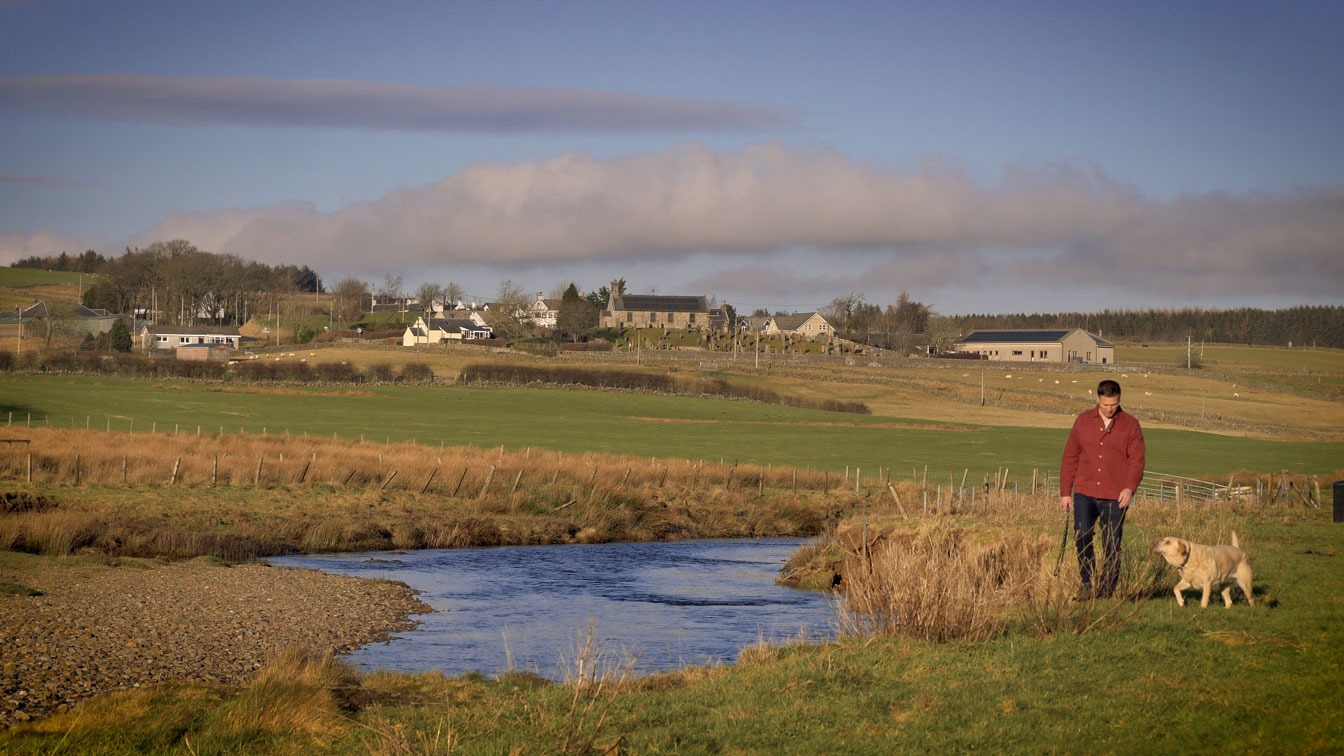
View across Crawfordjohn village and surrounding hills

Connected by valley, road and landscape

From Crawfordjohn, routes lead towards Sanquhar and Kirkconnel to the south west, Douglas to the west, Lanark to the north, Biggar to the north east, and Abington and Crawford to the east.

These routes helped connect the village with larger market towns, neighbouring parishes and the wider Clyde valley beyond. For farming families, roads and rail links were once vital for moving goods, livestock and people across the region.

The valley surrounding Crawfordjohn has always been more than a backdrop. It has shaped the work, movement and everyday lives of the people who lived here.

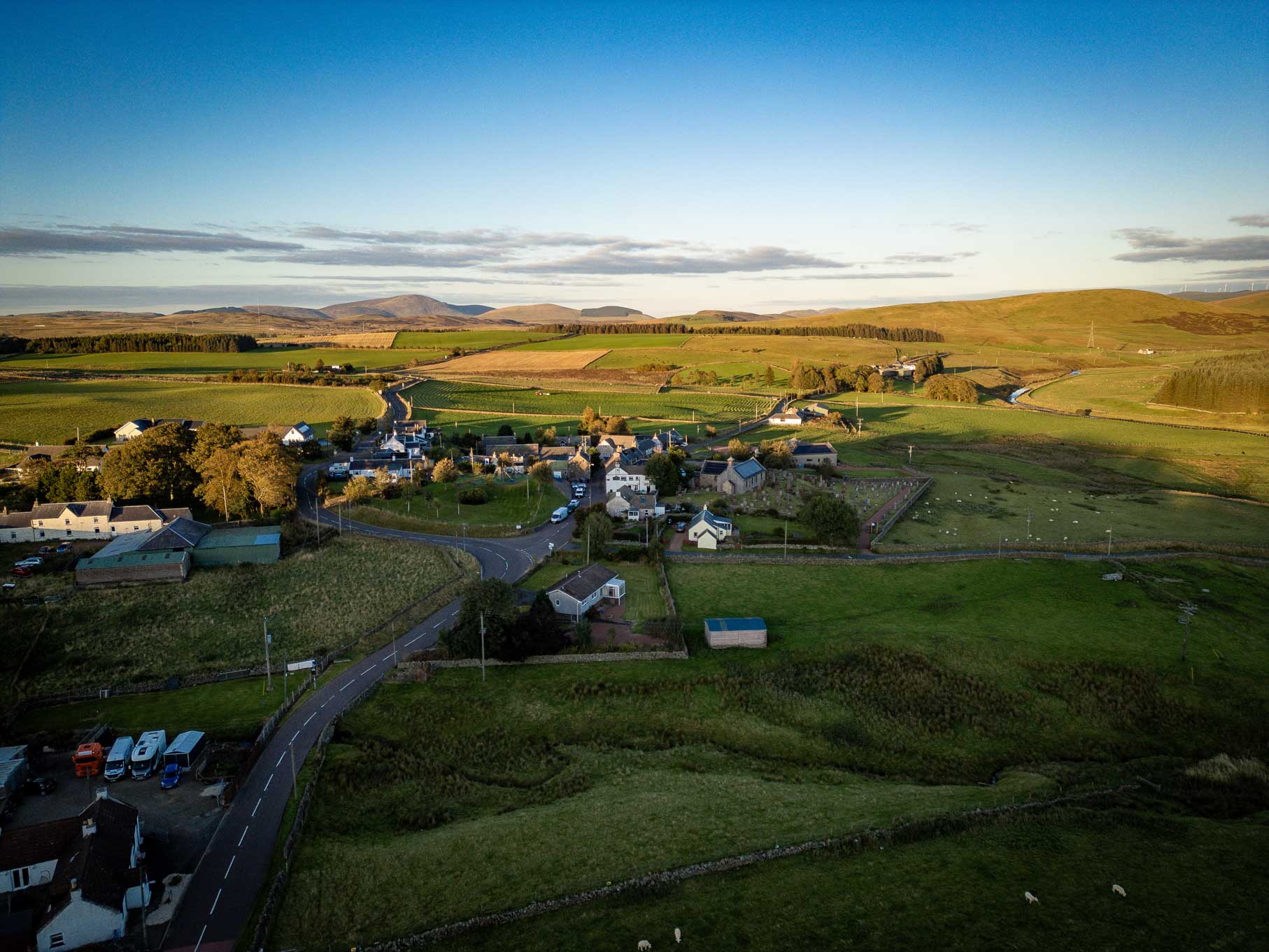
Crawfordjohn landscape with open farmland and hills

Rural life

The farming landscape

Farming remains an important part of the area, although life in Crawfordjohn has changed considerably over time. Mechanisation, changing rural employment and the growth of commuting have all altered the shape of village life.

Former farm cottages have become homes, holiday lets and places for small businesses, while the surrounding land continues to support sheep, cattle and other rural work.

Crawfordjohn from the Air

See the landscape from above

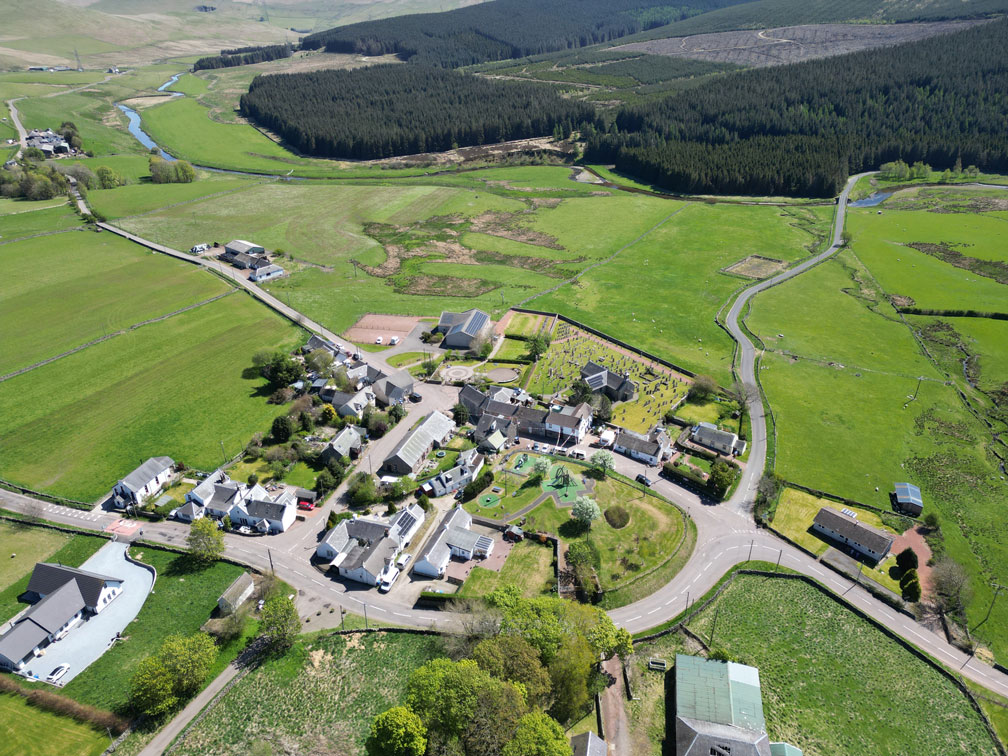
Aerial drone videos by local resident and film maker David Barton show Crawfordjohn and the surrounding area from a different perspective.

The videos include views of the village, nearby farms, waterways, reservoirs, winter landscapes and historic sites such as Black Hill Celtic Hillfort.

Aerial view of Crawfordjohn and the surrounding countryside

Places of Interest

A few of the places connected with Crawfordjohn’s local history, from legends of a lost castle to quarrying, books, estates and community life.

🏰

Crawfordjohn Castle

Legend has it that there was once a castle close to the village. The story links it with James V and Elizabeth, daughter of Carmichael of Meadowflat, keeper of nearby Crawford Castle.

It is also said to have served as the headquarters of James and his Queen during a hunting expedition, with preparations made on a grand scale and tapestries brought from Edinburgh and Stirling Castles.
📚

Crawfordjohn Library

Crawfordjohn once possessed its own library, said to be more worthy of a larger community. Its contents were greatly increased by a bequest from Dr Proudfoot of Kendal, a native of the parish.

Many of these books now form a collection within Crawfordjohn Heritage Venture Museum.

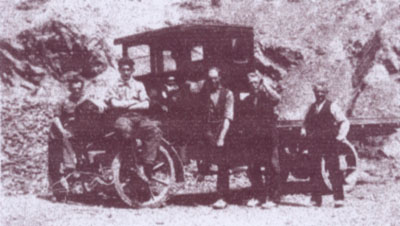
Craighead Quarry workers in the 1930s
🥌

Craighead Quarry

Craighead Farm was the site of a quarry where blocks of Essexite were cut from Craighead Hill and shaped into curling stones.

The stones gained a reputation for taking a high polish, having a hard quality and giving a good ring for local curlers. The quarry also produced small gravel stone used in many local gardens.

Picture: Craighead Quarry workers, 1930s.

Gilkerscleugh House
🏛️

Gilkerscleugh House

In a statistical account, Gilkerscleugh belonged in 1632 to the Hamiltons, a cadet branch of the Hamilton of Crawfordjohn family. By the late 1700s the family had sold their property in the parish, and the house later belonged to the Colebrookes.

The old house was a well-preserved mansion with thick walls, small windows, high stepped gables and a staircase carried up in a projecting turret. The Colebrookes renovated and added to it for use as a shooting lodge in 1907.

The estate was sold in 1921 and bought by the Mitchell family, connected with the Mitchell Library in Glasgow. Stephen Mitchell, who contributed much to the local community and served as a church elder, also held the parliamentary seat of Lanark between 1924 and 1929. The house was later sold and was destroyed by fire in the 1950s.

The museum collection includes other articles relating to Gilkerscleugh and its history.

Explore the Wider Area

Crawfordjohn is well placed for exploring other historic towns, villages and heritage attractions across Upper Clydesdale and the Lowther Hills.

🏘️

Biggar

The market town of Biggar lies to the north east of Crawfordjohn and has a strong local heritage tradition. Biggar & Upper Clydesdale Museum explores thousands of years of rural and small-town life in the area.

Visitors to Crawfordjohn may wish to combine their trip with a visit to the museum and other historic attractions in Biggar.

Visit Biggar & Upper Clydesdale Museum →
⛏️

Leadhills and Wanlockhead

To the south, Leadhills and neighbouring Wanlockhead are closely associated with Scotland’s lead-mining history. The surrounding Lowther Hills retain a distinctive industrial and rural heritage.

The Museum of Lead Mining at Wanlockhead tells the story of the local mining community, with museum displays, historic buildings and an underground mine tour.

Visit the Museum of Lead Mining →

Crawfordjohn Today

🐑

Farming

Farming is no longer the only feature of village life, but it remains central to the landscape and identity of the area.

🏫

The Former School

The primary school was once at the centre of the community. Its closure marked a major change, but school memories remain part of the village story.

☕

The Colebrooke Arms

The Colebrooke Arms remains a familiar local landmark and a welcoming place for residents, visitors and those passing through.

❤

The Village Hall

Built in 1999 as part of a Millennium Lottery scheme, the Village Hall continues to provide a space for events and community life.

Explore more of Crawfordjohn’s story

Visit the museum to discover local photographs, records, artefacts and stories from the surrounding area.